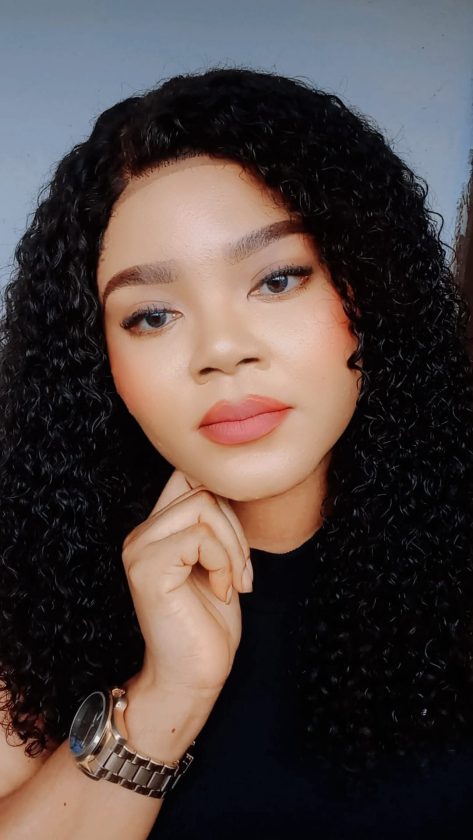

By Oreva Godwin
I am proudly a feminist, but not a bitter woman. I believe a man is the head of the home, and I believe in support, partnership, and respect. I also believe that when a woman is married, she should not be forced to carry the burden of being both mother and father when she has a husband beside her.
Let’s correct the narrative pushed by broken, misled women who use feminism as a shield for pain instead of healing. That is not feminism. That is trauma speaking.
Some women were blessed to grow up with parents who taught them self-worth in their early years. Some had those teachings but let society, pressure, and wrong friendships drown them. And then there are women who learned their worth only after life broke them, through heartbreak, humiliation, or betrayal.
However it comes, self-worth is necessary. Because the truth is this: not every woman will meet a man who will teach her how to value herself. Yes, kind men exist, but good men are slowly becoming rare jewels. You cannot sit and wait for one to arrive and remind you who you are.
You show a man how to treat you, not by lecturing him, but by how you present yourself. Your tone, your posture, your choices, your boundaries, the disrespect you reject, and the dignity you carry in your soul.
The African woman has been trained to believe that her value lives in a man. We were raised to swallow pain and smile, to excuse men for their excesses while allowing them to police us, to tolerate toxicity and call it “submissiveness.” But many of us were not groomed for peace, we were groomed for a lifetime of silent slavery.
A woman who knows her worth understands that she deserves tenderness, respect, softness, and protection. She does not depend on a man’s money to survive, his money is only an addition to the life she already built.
She carries herself with pride. She refuses to entertain demeaning questions like “What do you bring to the table?” because a woman of worth is the table, the meal, and the entire dining room. If he cannot see that, he is not the man she is meant for.
But knowing your worth does not mean men will stop trying to sexualize you or drag you backward with outdated ideologies. It only means you will always be ready to stand firm, defend your dignity, and put such men in their rightful place.
A woman who knows her worth guards her body, not as a religious trophy, but as a symbol of her self-respect. She never lets herself be a sex object to men. Her body is her crown; not everyone should touch a crown.
She is educated, not only by certificates but by wisdom, exposure, and a mind that sees beyond her immediate reality. She speaks with sense, and when she does, people pause.
A woman who knows her worth walks with elegance. Her presence speaks before her mouth opens. She dresses to command respect. She stands on her rights and does not shy from responsibility.
But let me emphasize a hard truth: It is dangerous for a woman to discover her worth after marriage. Not every woman will marry an amazing man. Love fades; reality arrives. And sometimes that reality is too heavy to easily escape from.
If you enter a marriage with no sense of self-worth, then years later decide to discover yourself, grow, and demand respect, your husband may see you as a stranger. He would feel you have changed the contract. He may call you rebellious, a chameleon, or ungrateful, simply because your new self-worth threatens the foundation of the marriage.
Ekene was blessed. Her father raised her with a strong sense of self-worth. He poured identity, confidence, and pride into her. When he died, something in her went silent.
She fell into the wrong company, people who believed a woman’s highest achievement was marriage. Slowly, their voices became louder than her father’s teachings. She accepted the African chain placed on women and wore it proudly.
She met Jack. Jack saw her softness and shaped it into submission. Her dreams died quietly, one by one. She became a full-time housewife, not out of choice, but because that was the only identity her marriage allowed.
One day, as she listened to teachings about purpose, partnership, and dignity, she felt something break inside her. A woman she once knew, a woman her father raised, knocked on the door of her heart.
Ekene realized she was living as a slave. She tried to speak up. She tried to set boundaries. She tried to defend herself. But to Jack, this was rebellion. He felt tricked; he had married a shadow, not a woman of value. And when the shadow tried to rise, he could not handle the transformation.
Ekene found herself trapped: No money to leave. No respect to stay. No happiness to hold on to.
A painful dilemma confronted her. She felt trapped, drained and unsure of how to resolve the puzzle.
Ella on the other hand had always known her worth and how to hold her own. She was confident, driven, bold. She met Onome, a man who admired her strength but feared it. He wanted her light but not her fire.
So he pretended. He played the modern man, the feminist ally, the progressive thinker. He played it so well he almost convinced himself.
But once the engagement was sealed and the world knew they were together, his mask slipped. His voice became heavier. His opinions became commands. He was ready to “put her in her place.”
Ella saw the red flags forming a pattern of doom. One month to the wedding, she made the hardest decision of her life.
She chose herself.
She walked away, not because she didn’t love him, but because she loved herself more.
I understand Ella deeply. In one of my own past articles, “Does Marriage Stop a Woman’s Dreams? My Story,” I shared how knowing my worth saved me from a lifetime of regret. Calling off a relationship is hard. Calling off a wedding is harder. But a broken relationship is still better than a broken marriage.
A partner is beautiful. Children are blessings. But nothing is more sacred than your peace, your dignity, and your self-worth.
Choose yourself.
Break the African chain that ties a woman’s existence to marriage. Respect your man, support him, love him, but never fear him. He is not your creator. Only a slave fears her master.
No woman was born to be a slave
*Oreva Godwin, The Southerner
REDEFINED