
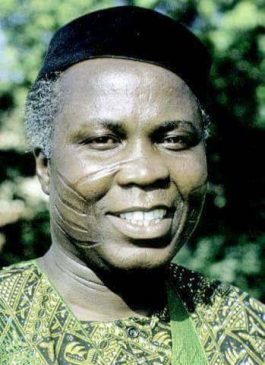
*Late Chief Samuel Ladoke Akintola
President Bola Ahmed Tinubu has called on Nigerians to imbibe the enduring qualities of courage, resilience, unity and politics of cooperation exemplified by the late Chief Samuel Ladoke Akintola, while consciously eschewing bitterness, acrimony and divisive tendencies in national life.
The President made the call on Thursday through the Secretary to the Government of the Federation (SGF), Senator George Akume, who represented him at the 2026 Samuel Akintola Memorial Lecture and the 60th Remembrance of the former Premier of Western Nigeria, held at the International Conference Centre, University of Ibadan.
President Tinubu, who was the Special Guest of Honour at the event, conveyed his warm greetings to participants and described the memorial lecture, themed Unity in Diversity: Lessons from Chief Ladoke Akintola’s Legacy, as a fitting tribute to one of Nigeria’s foremost nationalists whose life and sacrifice remain central to the country’s historical journey.
According to the President, Chief Samuel Ladoke Akintola, like several other leaders of Nigeria’s formative years, paid the ultimate price with his life so that the nation could attain its full potential. He recalled that the January 15, 1966 military coup extinguished many national leaders in their prime and set Nigeria on a difficult path, but stressed that the country has endured and will continue to prevail as one strong, indivisible and united nation.
President Tinubu reassured Nigerians that, notwithstanding prevailing socio-economic challenges, his administration remains firmly committed to building on the foundations laid by Chief Akintola and other national heroes through reforms, policies and people-oriented initiatives aimed at securing a more sustainable and inclusive prosperity.
He urged Nigerians to exercise patience and understanding as ongoing reforms begin to yield positive outcomes, emphasising that the objectives of government policies are not to make life harder for citizens but to secure a brighter and more stable future for all.
Reflecting on the life and times of Chief Akintola, the President described him as a man of many parts who distinguished himself as a teacher, journalist, legal mind and passionate politician. He noted that Akintola rose from humble beginnings in Ogbomoso to national prominence, becoming the first Premier of the Western Region in post-independence Nigeria.
The President highlighted Akintola’s service as a federal minister, the first Leader of the Opposition in the Federal Parliament and Aare Ona Kakanfo of Yorubaland, as well as his contributions to major national institutions such as the University College Hospital, Ibadan, Nigeria Airways and the University of Ife, Ile-Ife. He noted that Akintola was widely regarded as one of the most astute politicians of his era.
Beyond public offices and traditional titles, President Tinubu said Akintola’s greatest legacy lay in his ideals and principles, particularly his advocacy of the politics of cooperation, a bridge-building philosophy that emphasised consensus over conflict and national unity over regional isolation.
He recalled that Akintola consistently urged alignment with the national mainstream and championed equitable distribution of the nation’s wealth to all regions through his doctrine of a fair share.
The President also reflected on the narrative surrounding the January 1966 coup, noting that while allegations of corruption were cited as justification, Chief Akintola stood out as a builder who initiated and completed impactful development projects. He observed that a deeper scholarly examination of public administration in pre-1966 Western Nigeria would further enrich the nation’s historical understanding.
President Tinubu paid tribute to other patriots who lost their lives during the coup, including Sir Ahmadu Bello, Sir Abubakar Tafawa Balewa, Chief Festus Okotie-Eboh and senior military officers, noting that their sacrifices underscore the grave consequences of disunity, distrust and political intolerance.
Describing Nigeria as a nation of diverse peoples, languages and faiths, the President stressed that diversity must be harnessed as a source of strength rather than division. He affirmed that unity in diversity remains the only viable path to lasting peace and progress in a plural society like Nigeria.
Highlighting current efforts to promote inclusive development, President Tinubu pointed to the establishment of Regional Development Commissions across the six geopolitical zones as a deliberate strategy to decentralise development, address region-specific challenges and ensure that no part of the country is left behind. He said this approach reflects Chief Akintola’s philosophy of fairness and equitable distribution of national resources.
The President also underscored the importance of human capital development, particularly education, citing the Nigerian Education Loan Fund as a landmark initiative designed to remove financial barriers to higher education. He noted that over 600,000 students nationwide have already benefited from interest-free loans under the scheme, describing education as the most potent weapon against poverty, insecurity and division.
Addressing the people of the South-West, President Tinubu acknowledged the region’s profound contributions to Nigeria’s development and assured that his administration remains attentive to its aspirations for good governance, infrastructure development, economic opportunities and respect for cultural heritage. He noted that the South-West Development Commission is operational, with federal projects in power, roads, rail, agribusiness and innovation being accelerated.
In concluding, President Tinubu urged Nigerians to draw inspiration from Chief Ladoke Akintola’s legacy of bridge-building, fairness and patriotism, stressing that the remembrance of past tragedies should serve not to reopen old wounds but to heal them through understanding and a renewed commitment to national unity.