By Comrade Mark Akhuetie
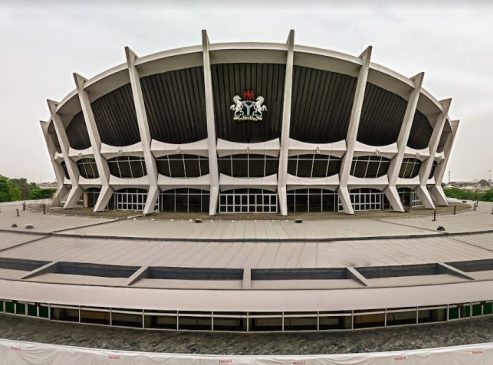
The renewed conversation around the National Theatre of Nigeria following its renovation and the release of new venue rates has opened an important debate about the future of the nation’s foremost cultural monument.
There is no doubt that restoring the National Theatre to a world-class standard is a welcome development. For decades, the edifice has stood as a symbol of Nigeria’s cultural identity, hosting landmark events, performances, exhibitions, and gatherings that shaped the nation’s creative history.
A modern National Theatre should indeed command prestige. It should attract corporate organisations, international events, major cultural programmes, and high-value engagements that can generate revenue for sustainability.
However, beyond the beauty of the structure and the commercial possibilities lies a more fundamental question: how does a national cultural institution remain connected to the creative community it was built to serve?
The National Theatre is not just another event centre. It represents the home of Nigerian culture. It carries the history of theatre practitioners, musicians, filmmakers, dancers, performers, and generations of creatives who have contributed to the country’s artistic identity.
This is where concerns around accessibility become important.
The newly announced rates may be understandable from a business sustainability perspective, especially if the facility is expected to operate at international standards. However, a balance must be created so that the pricing model does not unintentionally place the National Theatre beyond the reach of the very practitioners whose works give the institution meaning.
Corporate organisations and commercial events can reasonably operate under premium rates that support the maintenance and prestige of the facility. But for creative industry stakeholders — including Nollywood guilds, professional associations, theatre groups, student filmmakers, cultural organisations, and emerging talents — there should be structured intervention.
Possible measures could include:
- special creative industry rates;
- discounted access windows for recognised guilds and associations;
- partnership arrangements for film festivals and cultural events;
- student and emerging talent programmes;
- annual creative industry access schemes.
Such measures will not diminish the value of the National Theatre; rather, they will strengthen its identity as a living centre of Nigerian creativity.
A world-class cultural institution is not defined only by its architecture. It is defined by the people who fill it with ideas, performances, stories, and memories.
Beyond the pricing conversation, another important issue deserves attention — the welfare of the workers of the National Theatre.
Reports from some staff members indicate that many workers were displaced when renovation works commenced, with expectations that they would return to their offices after the completion of the project. However, concerns remain that some have not been fully reintegrated into their former work environment and are still operating from temporary arrangements within the complex.
A renewed National Theatre should also represent a renewed dignity for the people who have kept the institution running over the years.
This is where the Radio, Television, Theatre and Arts Workers Union (RATTAWU) has an important role to play in continuing to advocate for the welfare, restoration, and proper reintegration of its members.
The revival of a national monument should not only be measured by the quality of the building, but also by how it treats the people connected to it.
The National Theatre belongs to Nigeria. Its future should reflect a careful balance between sustainability, accessibility, and inclusion.
The goal should be a National Theatre that is attractive to investors, respected globally, and yet remains a welcoming home for the creative community that gives it life.
A truly successful revival is not just about renovating a building. It is about restoring a cultural ecosystem.