
By Uzo Amadi
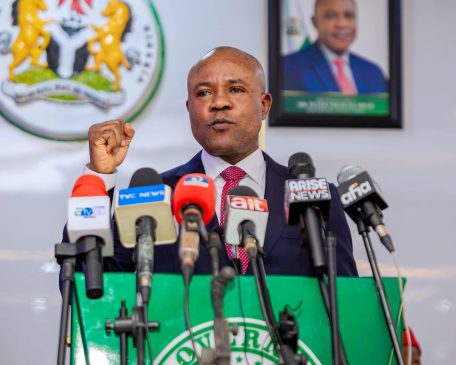
Governor Peter Mbah’s recent defection to the All Progressives Congress (APC) presents a defining moment for Enugu State. While most of the discussion dwell on the political aspect of his defection, beneath the noise lies a deeper opportunity, one that could redefine and reshape Enugu State’s developmental trajectory for years to come.
Beyond politics, Mbah’s decision signals a strategic alignment with the Federal Government that holds the potential to unlock unprecedented support for projects and initiatives directly benefiting the people of Enugu.
As an indigene of the state, I see this as a pragmatic step — an opportunity to strengthen collaboration, attract investment, and accelerate the delivery of essential infrastructure, housing, and social development programmes.
Political alignment is only meaningful when it leads to improved livelihoods. Jumping from one political party to another without attracting improved governance benefits would be a waste of time and money.
Governor Mbah’s challenge, therefore, will be to ensure that his new relationship with the centre is primarily driven by governance, not politics. The people of Enugu state expect visible dividends — roads that work, water in their homes, and jobs that lift families out of poverty.
If properly executed, the benefits of this political and policy alignment are far-reaching. For instance, the proposal to set up a Federal Affairs Liaison Unit in the Governor’s Office to track, negotiate, and coordinate federal projects would be the backbone of effective state-federal collaboration.
Moreover, by leveraging Public-Private Partnerships (PPPs) through the Infrastructure Project Preparation Facility, Enugu can attract both federal co-financing and private investment into priority sectors. This dual financing model ensures that projects are not only bankable but also sustainable.
The ripple effect will include increased employment, a stronger local economy, and greater investor confidence. For Enugu’s youth, this also means new opportunities in the building, technology, and creative sectors, sectors already thriving under Mbah’s innovation-driven governance agenda.
Ultimately, Governor Mbah’s defection to the APC should not be seen as a mere political maneuver but as a pragmatic step towards securing Enugu’s place in Nigeria’s new development narrative. What matters now is how this opportunity is managed.
Transparency, accountability, and citizen engagement must guide every negotiation and project. The people must see, touch, and feel the benefits of this new chapter. Its added value to the ongoing “Tomorrow is Here” strategic developmental projects should stand out.
Incidentally, history will not remember the politics of today’s headlines, but it will remember whether this decision improved lives and transformed communities. If Governor Peter Mbah stays focused on that mission, his defection could well be the turning point that moved Enugu from aspiration to achievement — from promise to prosperity.
*Uzo Amadi who can be reached at uzocamadi@yahoo.com, writes from Abuja