
By Agbo Favour Amarachi
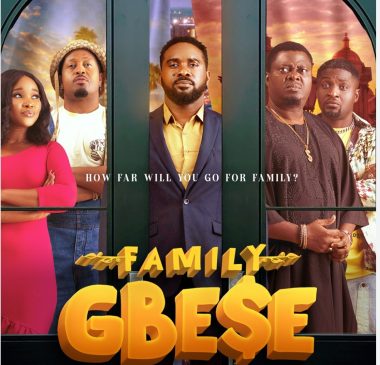
THE movie, ‘Family Gbese’ is a voyage into familial obligations and the moral compromises that accompany ambition.
By intertwining elements of comedy and drama, the filmmaker aim to create an emotionally layered experience; however, while the comedic elements are present, they are not particularly impactful, relying heavily on audience preferences for effectiveness.
This approach results in a lightweight emotional experience, primarily because of the relatability of Nnamdi’s struggles, which mirror dilemmas of loyalty, responsibility, and personal ambition. These thematic choices enrich the story’s accessibility, encouraging viewers to reflect on their own boundaries when faced with impossible decisions, even as the film occasionally leans more on familiar tropes than on profound revelations.
A brilliant young man Nnamdi Nwagba played by Uzor-arukwe is on the verge of finally winning in life and securing the keys to the pinnacle of his career, with Yetunde olopade, a beautiful woman played by Lilian Afegbai at his side as the cherry on top is beset by ghosts from his past, Faced with his older brother Gozie’s mounting debt to a local gangster Nnamdi finds himself pressured into money laundering to protect his family.
With the lives of his loved ones at stake, Nnamdi must choose between the devil and the red, blue sea, two dangerous paths from which there is no return journey.
The movie mirrors proceedings from the point of view of a somewhat average man, which is far removed from the elitism that’s dominated most Nollywood productions. We see mentioned places like Iyana Ipaja, which are hardly featured or recognized in movies set in Lagos.
Family Gbese incorporates both Igbo and Yoruba, bringing some cultural dynamism to the plot, which adds to its realism and appeal to diverse audiences.
Directed by Michelle Bello, Family Gbese was written by Chinazao Onuzo. It featured stars like Ireti Doyle, Muyiwa Ademola, Adeniyi Johnson, Yemi Solade, Fathia Williams and Seun Kentebe.
Uzo Arukwe gave a brilliant performance portraying Nnamdi, a top-investment banker from a tough background who has made it into the corporate world, where he’s now trying hard to belong. Engaged to the wealthy Yetunde Olopade, Uzor Arukwe painted the perfect picture of the troubled and desperate man, he’s torn between loyalty to his family and his aspirations, struggling to secure his dream life while keeping a past that could threaten his future and potentially lead him to prison.
Nollywood veteran lover boy, Mike Ezuruonye famously known for Brother Jekwu takes on the character of Gozie, Nnamdi’s older brother. Unlike Nnamdi’s polished corporate life, Gozie is deeply rooted in their rough childhood neighborhood and has a complicated past. His history of questionable choices leaves him indebted to a local gangster, dragging both himself and Nnamdi into a web of dangerous consequences that threaten their family’s stability and future.
Not forgetting the delectable Lilian Afegbai appears as Nnamdi’s fiancée, Yetunde is ambitious and polished, navigating the pressures of her wealthy family. Her mother, Dolapo (played by Ireti Doyle), adds to this pressure, thus creating a personal dilemma for Yetunde as she weighs her family’s desires against her own aspirations and happiness.
2022 AMVCA winner, Teni Aladese takes on the role of Ayomikun Balogun in Family Gbese. Ayomikun, A PR executive, who like Nnamdi Nwagba climbed her way up from a humble background, gets her personal and professional life complicated as she feels a romantic connection to Nnamdi, despite his engagement.
Sound quality is a significant drawback, with poor distinction between background and foreground audio that often results in distracting clashes. This issue becomes particularly frustrating in critical scenes, such as when Nnamdi attempts to explain his character’s psychology. The dialogue is difficult to decipher, and key moments with Nnamdi and Ayomikun are similarly undermined by these audio inconsistencies. The fast-paced editing, though effective in maintaining narrative momentum, can leave viewers struggling to absorb information, adding that in most cases, there are no subtitles, and especially as there’s no option to rewind in the cinema setting.
While the sound design does have its merits, these technical flaws detract from the immersive potential of the film. For those seeking to bask in the emotional weight of the story, the cinema fails to amplify these feelings to their fullest extent. However, if the goal is a lighthearted outing with relatable themes and opportunities for post-viewing conversations about shared experiences, Family Gbese might still be worth the ticket.
The production design is visually appealing, prioritizing aesthetics over a cinematic look, which works well for creating beautiful settings but does little to elevate the storytelling. The cinematography is similarly decent, but there are noticeable lapses, such as inconsistent lighting. For instance, the night scene where Yetunde leaves, and Nnamdi chases after her, is poorly lit, making it look like daytime and breaking immersion.