Football legend George Weah, the 1995 Ballon d’Or winner and three-time African Footballer of the Year, has issued a strongly worded statement, condemning CAF’s decision in awarding the 2025 AFCON trophy to Morocco after Senegal won the competition in January 2026.
Drawing on FIFA’s Laws of the Game—particularly Law 5, which grants the referee full and final authority during a match—Weah emphasized that once the referee permitted play to continue after the walk-off and the game reached its conclusion, the result obtained on the pitch should stand irrevocably. He pointed out that the referee’s report described only a temporary stoppage, not a forfeiture, and recommended sanctions rather than nullification.
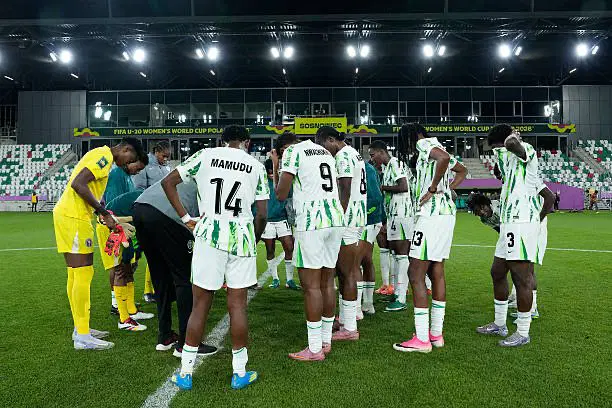
The dramatic saga surrounding the 2025 Africa Cup of Nations (AFCON) final between Senegal and Morocco took a shocking turn months after the match concluded. In January 2026, Senegal emerged victorious with a 1-0 win in extra time during a chaotic encounter in Rabat, where the Senegalese players briefly walked off the pitch in protest over a controversial late penalty awarded to Morocco. Despite the disruption, the referee allowed play to resume, the game continued through extra time, and Senegal lifted the trophy on the field.
However, the Confederation of African Football (CAF) later faced an appeal from the Moroccan Football Federation. In mid-March 2026, CAF’s Appeal Board ruled that Senegal had forfeited the match by walking off, breaching tournament regulations. The original result was overturned, and Morocco was awarded a 3-0 victory by default, stripping Senegal of the title and declaring the hosts as champions. This post-match intervention has since sparked widespread outrage across the continent, with critics arguing it undermined the sanctity of on-field results.
Weah warned that allowing committee decisions to override on-field outcomes sets a dangerous precedent, potentially leading to a future where referees’ calls on penalties, offsides, or red cards could be retroactively changed in boardrooms. He described the ruling as a blow to the integrity, fairness, and consistency of African football, claiming it had “scarred and blemished” the sport on the continent and eroded public confidence. The former Liberian president stressed that football must be decided by players and officials on the pitch, not re-litigated afterward.
In a pointed appeal, Weah urged the Court of Arbitration for Sport (CAS) and other relevant bodies to intervene swiftly and reverse what he called a “travesty.” He argued that without decisive action, African football risks sliding down a slippery slope where administrative rulings supersede the beautiful game’s core principles. His statement highlighted the broader implications for trust in continental competitions.
Weah also took the opportunity to address misinformation, clarifying that viral social media posts falsely claiming he supported CAF’s disciplinary action against Senegal were “blatantly false.” He called on those spreading such claims—often accompanied by his image—to stop immediately, reinforcing his firm stance against the decision while defending his legacy as an advocate for fair play in African football.