
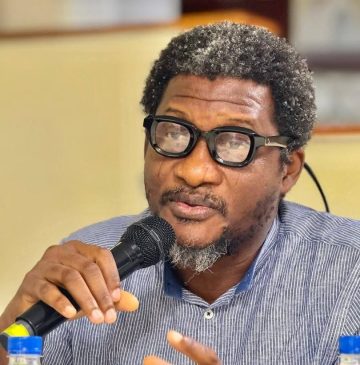
By Fidelis Duker
The safe rescue of 39 pupils and 7 teachers from Oriire Local Government Area brings a massive wave of relief to Oyo State—and indeed, the entire nation. For 56 agonizing days, these innocent children and their educators were held captive by the Ansaru terrorist group.
They endured unimaginable trauma, culminating in the horrific and tragic execution of their mathematics teacher, Michael Oyedokun. But while we celebrate their freedom, we cannot afford to gloss over the colossal security lapses that allowed this nightmare to happen, nor the devastating emotional toll left in its wake.
Let us be completely honest: how did we get here? How does a heavily armed terrorist group march into three schools, kidnap 46 citizens, and vanish into the forest for nearly two months? The system failed these families long before the military had to step in. It should not take a nationwide crisis, a month-long teachers’ strike, and international embarrassment to compel the state to secure its borders.
We cannot keep operating a reactive security system that only awakens after our citizens have been dragged into the bush. It is completely unacceptable that our rural schools have become soft targets for bloodthirsty bandits.
This is not an isolated incident; it is part of a systemic hemorrhage. More than 2,500 Nigerian students have been kidnapped since 2014. Between March 2024 and May 2026 alone, no fewer than 603 students and teachers were kidnapped across seven mass school abductions under the current federal administration.
This includes the mass abduction of 137 children in Kuriga, Kaduna State, and another massive raid where 315 students and teachers were taken from a school in Niger State. What makes these numbers truly infuriating is that they continue to climb despite a ₦145 billion Safe Schools Initiative fund meant to protect these very learning environments.
The physical and emotional devastation of the Oriire survivors is plain to see. Reports show these little children looking incredibly frail, physically exhausted, and severely malnourished after two months of starvation and terror in the wild. Imagine the psychological scars left on these young students who watched their own teacher being brutally executed.
As we speak they are currently hospitalized and receiving emergency medical care and vital psychological counseling before Governor Seyi Makinde officially receives them. But physical healing is only half the battle; the emotional scars of this ordeal will take a lifetime to mend, and the trauma has forever altered the fabric of that community.
The Nigeria Union of Teachers (NUT) was absolutely right to shut down classrooms in protest. In my opinion, teaching must never become a death sentence in Nigeria. We cannot expect educators to enter rural classrooms, or terrified parents to send their children to school, if the government cannot guarantee their basic survival.
The rescue, led by Major General C.R. Nnebeife, was an undeniable display of military capability. By choking off local supply lines, refusing toxic prisoner swaps, and capturing eight gang members, our troops proved they have the teeth to fight. But this victory must serve as a permanent, urgent wake-up call, not a political victory lap. We cannot wait for the next tragedy to deploy special forces.
Here is the policy recommendations section rewritten as flowing prose without numbers or bullet points—while retaining the urgency and clarity of your original intent.
To transition from reactionary rescue missions to absolute prevention, the federal and state governments must immediately implement a suite of structural policies. There is an urgent need to decongest and fortify rural institutions by establishing a “Safe School Cluster” model, where deeply isolated and under-protected rural schools are temporarily consolidated into better-fortified regional academic hubs with active security perimeters.
At the same time, the Federal Government must order a transparent, public, independent audit of the ₦145 billion Safe Schools Initiative financing to ensure funds are immediately channeled into physical infrastructure—such as CCTV, perimeter fencing, and solar-powered distress alarms—rather than administrative overhead.
Furthermore, the government must expedite the training and strategic deployment of the newly approved 1,000 forest guards directly along high-risk transit corridors like the Old Oyo National Park, pairing them with local Amotekun units who hold deep terrain intelligence.
Beyond security infrastructure, there is also a critical need for mandatory institutional psychosocial support, requiring the Oyo State Ministry of Education and Ministry of Health to permanently fund a multi-year trauma-informed therapy program within affected local government areas to address post-traumatic stress among survivors and community members.
I will conclude by saying securing our children’s lives is not a luxury but a fundamental duty. The government owes these traumatized families nothing less than absolute protection.
Fidelis Duker is a filmmaker, media practitioner, and politician who writes from Calabar.