By Abiodun Caston-Dada
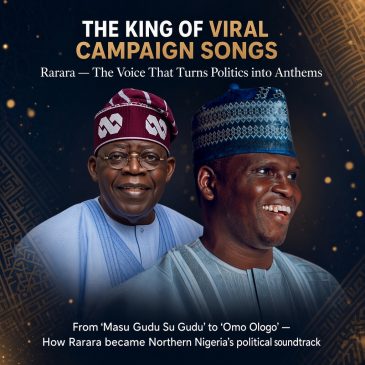
In the high-stakes world of Nigerian politics, few artists have mastered the art of turning a campaign message into a viral anthem quite like Dauda Kahutu Rarara. Born Dauda Adamu Kahutu on September 13, 1986, in Kahutu village, Danja Local Government Area of Katsina State, the Hausa singer rose from an almajiri background and the dusty streets of Kano to become the undisputed voice of Northern political campaigns. His unique gift lies in crafting songs that are not merely endorsements but cultural phenomena—catchy, sharp, and instantly shareable—capable of dominating rallies, markets, social media, and the collective memory of voters.
Rarara’s breakthrough came in 2007 with “Ruwa Baba,” a song composed for then Kano State Deputy Governor Abdullahi T. Gwarzo. The track quickly escaped the campaign trail and became a street anthem. He followed it with “Kainuwa” for Governor Ibrahim Shekarau, proving early that he could translate political loyalty into music that ordinary people sang with genuine enthusiasm. These early successes established a pattern that would define his career: Rarara does not simply praise politicians; he creates soundtracks that feel like popular culture.
His national reputation exploded during the Buhari years. Songs such as “Masu Gudu Su Gudu,” “Buhari Ya Dawo,” and others became inseparable from the APC’s northern campaign machinery in 2015 and 2019. Played endlessly at rallies and shared widely on phones across the region, these tracks turned political messaging into something people danced to, argued about, and remembered long after the elections. Rarara’s ability to blend traditional Hausa praise-singing with modern, synthesised Afropop beats made his campaign songs feel both culturally rooted and urgently contemporary.
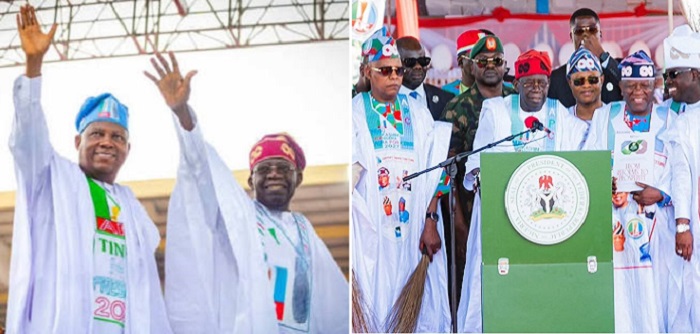
The peak of his viral power arrived with “Omo Ologo” in support of President Bola Tinubu. The song fused Hausa rhythms with Yoruba phrases, creating a rare cross-regional anthem. Its popularity soared when Rarara performed it live before the President and other top officials, prompting Tinubu, his deputy, the Senate President, and the Speaker of the House to join the dance. Clips of the moment flooded social media, cementing “Omo Ologo” as one of the most memorable campaign songs of the 2023 election cycle and a defining example of Rarara’s unmatched ability to create political music that travels far beyond its original audience.
Beyond the headline anthems, Rarara’s catalogue is filled with campaign tracks that have shaped local and regional contests. Songs such as “Hannun Karba” for Rabiu Musa Kwankwaso, “Baban Abba Ganduje,” “Jagaba Shine Gaba,” and later works for various Northern politicians demonstrate his consistency. Even when he shifts allegiances, the formula remains effective: sharp lyrics, memorable hooks, and production designed for maximum impact on both the campaign ground and digital platforms. Tracks like “Mutumin Banza,” “Likitan Kwarai,” and “Seyi Tinubu” continue to trend, showing that his audience remains hungry for his brand of political storytelling.
What makes Rarara’s campaign songs so effective is their dual nature. They function as both propaganda and entertainment. In markets, motor parks, and wedding parties across the North, his music is played not only for its political message but because it is simply good, danceable, and culturally resonant. This popularity has given him unusual influence. Politicians seek him out not just for endorsement but for the cultural legitimacy and viral reach his music provides. In an era when social media can amplify or destroy a political message overnight, Rarara remains one of the few artists who can still manufacture momentum through song.
His success has not come without criticism. Some accuse him of being a gun for hire whose loyalties shift with political fortunes, while others debate the ethics of his sharper invective tracks. Yet even his critics acknowledge the effectiveness of his craft. Few Northern artists have matched his ability to produce campaign songs that dominate public space so completely. Whether supporting Buhari, Tinubu, or regional power brokers, Rarara has repeatedly shown that a well-crafted song can still move crowds and shape conversations in ways traditional political messaging often cannot.
Today, more than fifteen years after his first major hits, Rarara remains the leading figure in Northern Nigeria’s political music scene. From “Ruwa Baba” to “Omo Ologo” and beyond, his career stands as a masterclass in the power of viral campaign songs. In a region where music and politics have always been tightly woven, Dauda Kahutu Rarara has perfected the formula—proving that the right voice, the right beat, and the right message can still turn a campaign into a cultural movement.
*Abiodun Caston-Dada is the publisher of ACADA Magazine, Nigeria’s most consistent and longest running Campus / Youth magazine