By Mogaji (Hon.) Seye Oladejo
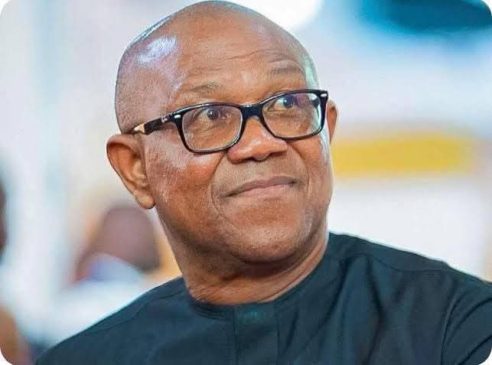
The decision by Peter Obi and his supporters in the Nigerian Democratic Congress (NDC) to resurrect and sing Nigeria’s old national anthem at their recent town hall meeting is yet another revealing demonstration of a political movement struggling to distinguish nostalgia from national progress.
It is, quite frankly, a classic case of the tail wagging the head: a political gathering allowing symbolism, sentiment and misplaced theatrics to take precedence over the weightier issues of national development, democratic maturity and responsible leadership.
While every Nigerian is entitled to personal preferences and historical sentiments, national symbols are not political playthings to be deployed selectively for partisan convenience. Nigeria has, through the lawful process adopted a new national anthem. One may debate the wisdom of that decision, but deliberately turning an abandoned national symbol into a political statement raises legitimate questions about the judgment and priorities of those involved.
More troubling, however, is the emerging pattern of conduct by Peter Obi that increasingly raises questions about the consistency between his political rhetoric and the responsibilities of national leadership.
This is not an isolated incident. It fits into a familiar pattern of gestures, pronouncements and political posturing that have repeatedly attracted criticism over his appreciation of national institutions, democratic conventions and the collective aspirations of a diverse Nigerian nation.
One cannot help but wonder why a man so determined to govern Nigeria appears so uncomfortable with some of the symbols, decisions and institutional expressions of the very nation he seeks to lead. Patriotism cannot be a selective performance, activated when politically convenient and suspended when reality becomes inconvenient.
Even more disturbing is the apparent ease with which Obi allows the emotional temperature and sentiments of his immediate political audience to shape his public conduct. His participation in this theatrical excursion into national nostalgia raises an important question about the independence of his leadership judgment.
For a man seeking the enormous responsibility of leading a nation of over 200 million people, such apparent susceptibility to the emotional impulses of his crowd is a major and worrisome leadership concern. A president must possess the temperament to listen to his supporters without becoming captive to their sentiments. Leadership is not about surrendering personal conviction to the loudest voices in the room or mistaking the applause of an enthusiastic audience for a national consensus.
The presidency requires maturity, independent judgment, intellectual discipline and the courage to provide direction even when such direction may not necessarily align with the immediate expectations of one’s supporters. A leader must be capable of managing emotions rather than being managed by them.
This episode further brings into focus the persistent questions surrounding Obi’s leadership credentials, particularly his seemingly incoherent political posturing, shifting political alignments and inconsistent policy agenda. Nigerians deserve more than political symbolism, emotional mobilisation and carefully choreographed public appearances. They deserve a clearly articulated, consistent and implementable programme for national development.
There is hardly a better description of an unpresidential presidential candidate than one whose political messaging appears so susceptible to the immediate sentiments of his audience while seeking the highest office in the land. Obi himself has reportedly characterised his current presidential aspiration as a valedictory shot at the office. That admission makes it even more important for Nigerians to interrogate the substance, consistency and governing philosophy behind his ambition.
The Nigerian presidency is neither an emotional experiment nor a retirement consolation. It is not an opportunity to indulge the sentiments of an enthusiastic political crowd. It is an office demanding sound judgment, institutional respect, policy consistency and an unwavering appreciation of the responsibilities of nationhood.
The old national anthem may evoke nostalgia for some Nigerians, but nostalgia is not a development agenda. It does not create jobs, build infrastructure, strengthen institutions, improve national security or put food on the tables of struggling families. Neither does singing an anthem, old or new, substitute for the hard work of nation-building.
Indeed, the irony is difficult to miss. At a time when Nigerians are looking for credible answers to pressing economic and social challenges, Obi and his followers appear more interested in conducting a political archaeology of national symbols than articulating practical solutions to contemporary problems.
The Nigerian Democratic Congress must also understand that political parties are not cultural nostalgia clubs. They are platforms expected to offer ideas, direction and credible alternatives for national advancement. A party’s political identity should be defined by the quality of its vision and the seriousness of its leadership, not by its ability to stage symbolic rebellions against established national conventions.
Peter Obi must be reminded that seeking the mandate to govern Nigeria comes with an obligation to respect Nigeria in its entirety. One cannot aspire to occupy the highest office in the land while treating national institutions and collective decisions as inconveniences to be challenged for political theatre.
At the Lagos APC, we remain committed to a Nigeria that is forward-looking, confident in its identity and determined to overcome its challenges. Our national development aspirations must not be held hostage by sentimental attachments to the past or political theatrics masquerading as patriotism.
Nigeria needs leaders who understand that history should inform the future, not hold it hostage. It needs a leadership culture that prioritises national cohesion, institutional integrity, sound judgment and practical solutions over emotional grandstanding.
Peter Obi and his NDC supporters are free to express their nostalgia for the old national anthem. But they should not mistake the volume of their singing for the depth of their patriotism or the strength of their political argument.
Ultimately, the Nigerian people must decide whether they want leadership driven by coherent ideas, sound judgment and a demonstrable commitment to national progress or one seemingly vulnerable to the shifting emotions of political crowds.
Hopefully, Nigeria will recognise the issues at stake and dodge this bullet. The future of over 200 million Nigerians is far too important to be left to sentiment, political theatrics and an uncertain leadership philosophy.
*Mogaji (Hon.) Seye Oladejo
Lagos APC Spokesman.
14/11/26