
By Enyinnaya Appolos
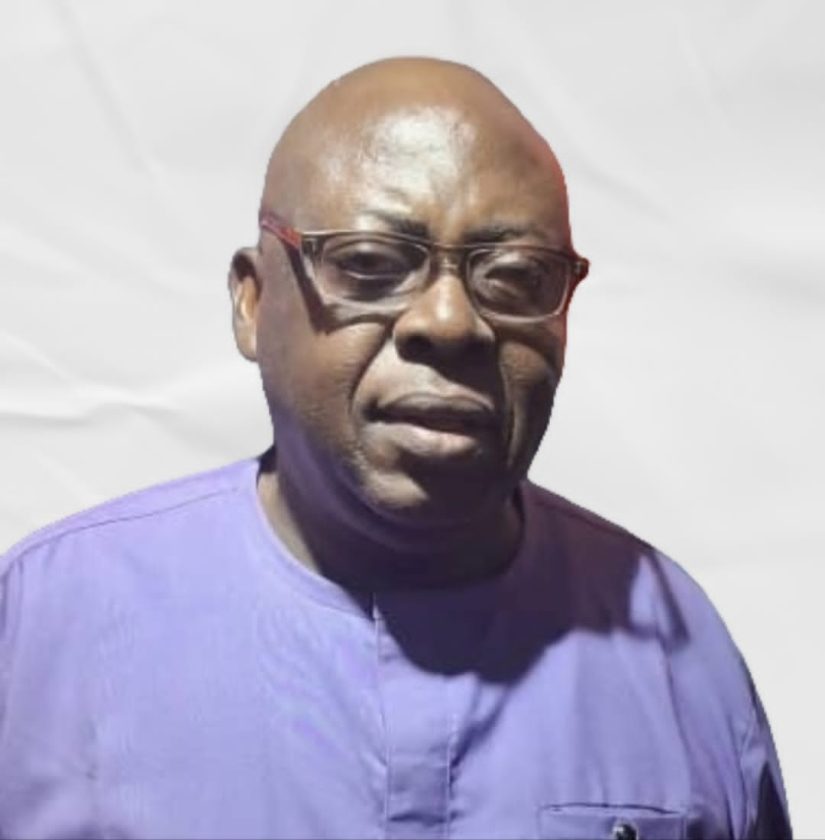
Nigeria’s diplomatic relationship with the Kingdom of Spain entered a new chapter on Monday, 14 September 2026, when His Excellency Dr Okezie Victor Ikpeazu presented his Letters of Credence to His Majesty King Felipe VI at the Royal Palace of Madrid.
The ceremony completed Ikpeazu’s accreditation as Ambassador Extraordinary and Plenipotentiary of the Federal Republic of Nigeria to the Kingdom of Spain. It also placed him at the centre of a bilateral relationship that has endured for more than 65 years.
Nigeria and Spain formally established diplomatic relations on 10 February 1961, barely four months after Nigeria gained independence. Spain subsequently authorised the establishment of its embassy in Lagos through Decree 383/1961 of 23 February 1961.
From those early beginnings, relations between the two countries have expanded beyond traditional diplomacy to include trade, energy, security, migration, culture, tourism and development cooperation. Nigeria maintains an embassy in Madrid, while Spain operates an embassy in Abuja and a consular presence in Lagos.
Ikpeazu’s accreditation process began on 13 July 2026, when he presented copies of his Letters of Credence to Adrián Martín Couce, Director-General of Protocol, Chancellery and Orders at Spain’s Ministry of Foreign Affairs, European Union and Cooperation.
The process culminated at the Royal Palace, where he was accorded military honours before presenting the original credentials to King Felipe VI. He was conveyed to the palace in a traditional royal horse-drawn carriage under the escort of the Spanish Royal Guard, a ceremony steeped in the history and traditions of the Spanish monarchy.
Following the presentation, Ikpeazu introduced members of the Nigerian diplomatic delegation and held a private audience with the King.
With the ceremonial formalities concluded, attention must now shift to the substance of his assignment.
Ikpeazu assumes office at a time when Nigeria requires diplomacy that produces measurable economic and social benefits. Modern diplomacy must go beyond official ceremonies, correspondence and high-level meetings. It must attract investment, open markets, promote national products, protect citizens and build partnerships that contribute directly to development.
Spain is a major European economy and an important buyer of Nigerian crude oil and natural gas. It also possesses expertise in renewable energy, agriculture, transportation, tourism, construction, maritime development and manufacturing. Nigeria, in turn, offers a large market, abundant natural resources, a youthful population and extensive investment opportunities.
Ikpeazu’s responsibility is to convert these complementary strengths into shared prosperity.
Speaking at a welcome reception organised in his honour by the Embassy of the Federal Republic of Nigeria in Spain, the Ambassador declared that his mission would be guided by President Bola Ahmed Tinubu’s foreign-policy agenda.
“I bring warm felicitations from the President and Commander-in-Chief, President Bola Tinubu, who has shared with us the mandate,” he said. “He anchored his international relations and foreign policy on what he calls the Four-D framework: Democracy, Demography, Development and Diaspora.”
The Four-D framework places democracy, Nigeria’s demographic strength, development and the diaspora at the centre of the country’s international engagement. The Presidency has identified the diaspora, in particular, as an important source of investment, expertise and human capital for national development. State House
Ikpeazu said the protection and welfare of Nigerians in Spain would be central to his tenure.
“We have a mandate to begin with the ‘D’ that concerns the diaspora, Nigerian citizens living in Spain. Therefore, the theme of our intervention during my tenure as Ambassador will be citizen-centred diplomacy, because the way we treat Nigerian citizens here will determine how others, including the host country, treat them.”
This commitment must translate into an accessible, responsive and proactive embassy, one capable of addressing consular difficulties, documentation challenges, emergencies and matters affecting the rights and dignity of Nigerians in Spain.
The Nigerian community also has a responsibility to respect the laws and institutions of its host country and conduct itself in a manner that protects Nigeria’s reputation. In return, the embassy must defend law-abiding Nigerians and ensure that they are treated fairly and with dignity.
Beyond citizen protection, Ikpeazu identified economic cooperation as another priority.
“What the President wants us to do is to drive shared prosperity between our two countries—Nigeria and Spain. This will be the thrust of our intervention during my tenure as Ambassador,” he said.
“I expect us to deepen our relationship in renewable energy, as well as in the exploration and processing of raw materials for export to other countries. My thinking is that if we create sufficient shared prosperity, we will be able to address the problems of irregular migration and poverty.”
This direction should encourage Spanish companies to look beyond Nigeria’s traditional oil and gas sector and explore opportunities in agriculture, renewable energy, infrastructure, technology, healthcare, housing, tourism and manufacturing. It should also create platforms through which Nigerian businesses and their Spanish counterparts can establish productive partnerships.
The assignment should resonate with Ikpeazu. During his eight years as Governor of Abia State, he became closely associated with the promotion of locally manufactured goods, particularly products from Aba. His Made-in-Aba campaign drew national and international attention to the creativity of local shoemakers, garment producers and other artisans.
That experience provides a foundation for product-driven diplomacy. Nigerian fashion, arts, films, music, food and indigenous fabrics can become instruments of cultural and economic engagement.
Ikpeazu and members of his family demonstrated this during the presentation of his Letters of Credence by wearing Akwete fabric. It was more than a fashion statement: it projected a distinctive Nigerian product before the Spanish monarchy and an international audience.
Symbolism, however, will not be enough. The success of his tenure will be measured by the investments attracted, markets opened, agreements facilitated, cultural exchanges promoted and Nigerians assisted.
At the welcome reception, Ikpeazu was joined by his wife, Dr Mrs Nkechi Ikpeazu; Rt Hon. O. K. Chinda; who represented the Minister for FCT, Chief Nysom Wike, Elder Raymond Aliga; Chief Okey Ahiwe; Dr. Chinedum Elechi, Nigerian international and Super Eagles defender Kenneth Omeruo; members of the diplomatic corps; and other distinguished guests.
The reception celebrated the beginning of a new assignment. Beyond the celebration, however, lies the weight of responsibility.
Ikpeazu has not inherited an empty office or a new relationship. He has inherited more than six decades of diplomatic engagement that must now be deepened and made more productive.
His task is to give that relationship fresh direction, one that brings Nigeria and Spain closer, expands economic opportunities and delivers concrete benefits to their citizens.
The royal carriage has taken him to the palace. The Letters of Credence have been presented. The formalities are over.
Now, the real work begins.
–Enyinnaya Appolos is a Nigerian journalist and the Peoples Democratic Party (PDP) candidate for Obingwa West State Constituency in the 2027 Abia State House of Assembly election.