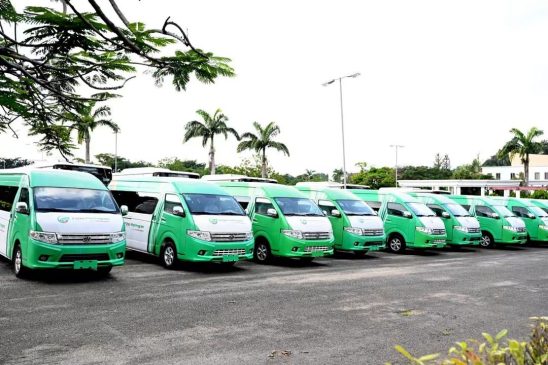
President Bola Ahmed Tinubu has directed state governments to accelerate the implementation of the National Affordable Compressed Natural Gas (CNG) Transit Programme. The directive aims to ensure that millions of Nigerians begin to experience measurable reductions in public transportation costs starting October 1, 2026.
The federal government is pushing for a swift, coordinated scale-up of gas-powered and electric vehicles to ease the financial burden placed on citizens following the removal of the petrol subsidy.
The policy framework follows an executive agreement reached on August 27, 2026, during a high-level meeting between President Tinubu and the 36 state governors. To supervise the rapid integration of alternative energy into local fleets, a dedicated federal-state implementation committee was established under the leadership of the Nigeria Governors’ Forum (NGF) chairman, Governor AbdulRahman AbdulRazaq of Kwara State. The committee is actively collaborating with the Presidential CNG Initiative (Pi-CNG), transport unions, and commercial operators to mapping out high-priority transport corridors.
According to data verified during progress assessments, the transition to alternative fuel sources is already yielding major savings in pilot regions. In Kaduna State, the deployment of 100 CNG-powered buses providing free transport along major routes successfully carried 3.2 million passengers during its first year, generating over N3.5 billion in cumulative savings for residents. Similarly, in Borno State, newly integrated CNG and electric public transit networks are charging commuters flat rates between N50 and N100 on routes where conventional petrol commercial vehicles charge up to N600.
To provide the logistical support needed for a nationwide rollout, the federal government is scaling up local refueling infrastructure and supply chains, while it has directed the establishment of 500 additional gas stations, doubling its previous project plans to build a network of 1,000 CNG refueling stations across the country. Additionally, over 120,000 vehicles have already been converted to run on CNG, with the procurement of an additional 100,000 conversion kits being fast-tracked to bring more commercial vehicles into the subsidized framework.
President Tinubu emphasized that because vehicles running on compressed natural gas spend 60% to 80% less on fuel compared to premium motor spirit (petrol), these massive operation savings must be directly passed down to ordinary citizens. He urged regional leaders to maintain strict momentum ahead of the October deadline by setting up localized conversion centers and technical workshops.